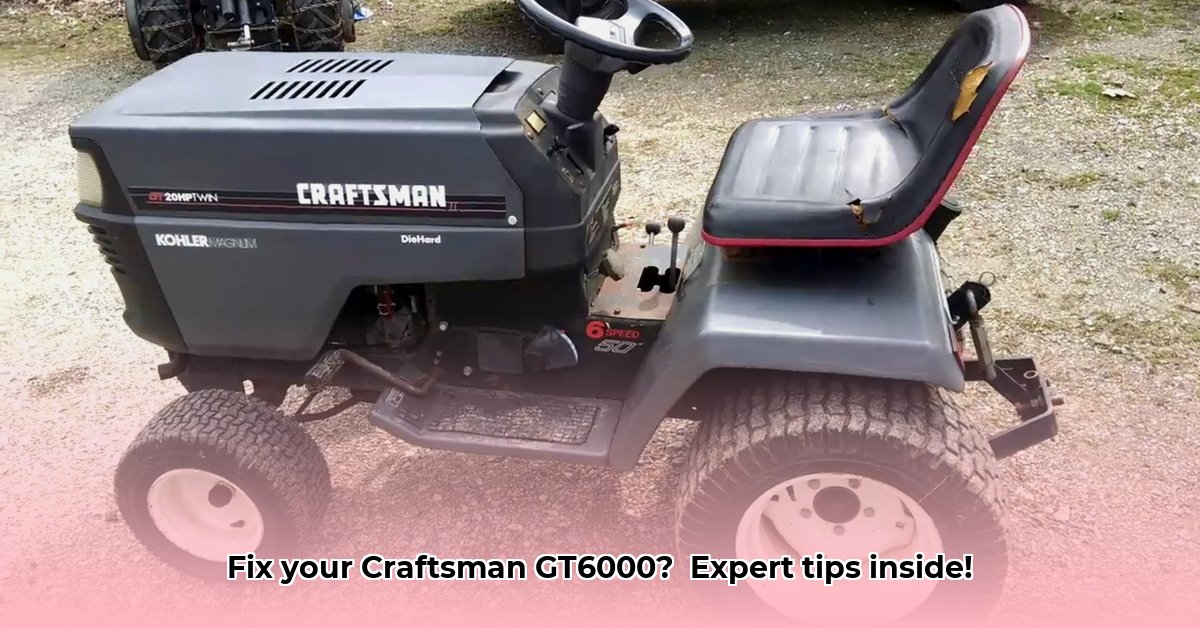
The Craftsman GT6000 is a reliable workhorse, but years of production and varying engine types mean pinpointing your model's specifics can be a challenge. This guide cuts through the confusion, providing clear instructions for maintenance and troubleshooting, regardless of your GT6000's configuration. For help with carburetor issues, check out this helpful resource: carburetor help.
Identifying Your Craftsman GT6000 Model
Before beginning any maintenance, accurately identifying your Craftsman GT6000 model is crucial. Inconsistencies in production years and engine types necessitate a thorough identification process. Follow these steps:
Engine Identification: The engine itself is your primary source of information. Look for a metal plate affixed to the engine block. This plate contains vital information, including the engine manufacturer (e.g., Kohler, Briggs & Stratton), model number, and serial number. Photograph this information for later reference. This is essential for ordering parts and finding relevant manuals.
Chassis Identification Plate: Many Craftsman GT6000 models also feature a build plate or identification plate affixed to the chassis. This plate may include further model-specific details, such as the manufacturing year or additional identifying codes. A thorough visual inspection of the tractor's chassis will help locate this important information.
Visual Comparison: Use online resources to compare your tractor to known Craftsman GT6000 models. Pay close attention to the engine size and shape, transmission type, and other identifying features. Dedicated online forums and communities specializing in vintage lawn tractors can be invaluable resources for this visual identification.
Online Resources: Though Sears' official archives may prove limited, leverage online forums and communities dedicated to classic lawn tractors. These resources often provide valuable discussions and images that can aid in model identification based on visual characteristics.
Essential Maintenance for Your Craftsman GT6000
Regular maintenance is key to extending the lifespan of your Craftsman GT6000. Neglecting these tasks can lead to costly repairs down the line. Prioritize the following:
Oil Changes: Consult your specific engine's manual (or the information found on the engine identification plate) for the correct oil type and capacity. Warm the engine slightly before draining the oil. Replace the oil filter and refill with the recommended oil. Always verify the oil level after the change. Isn't consistent oil maintenance crucial for engine longevity? Yes, oil changes are essential.
Air Filter Replacement: A clean air filter is vital for engine performance. Inspect the air filter regularly and replace it when dirty. A clogged filter restricts airflow, reducing engine efficiency. Does a clean air filter improve fuel efficiency? Absolutely. It can significantly improve fuel economy.
Spark Plug Maintenance: Worn spark plugs cause hard starting and poor engine performance. Inspect the spark plugs visually, and check the spark gap using a gauge. Replace them as needed. Regular spark plug checks translate to better starting and reduced emissions. True, this is a basic but important step.
Blade Sharpening (If Applicable): For models with a cutting deck, sharp blades are essential for a clean cut. Sharpen or replace dull blades to avoid tearing grass and straining the engine. Sharp blades mean a healthier lawn, right? Indeed, they make for a much cleaner cut.
Hydrostatic Transmission Fluid: Regularly check the level and condition of your hydrostatic transmission fluid. Low or contaminated fluid can cause serious damage. Refer to your manual for the correct fluid type and changing intervals. Is this the most often-neglected aspect of GT6000 maintenance? It often is, leading to costly repairs.
Belt Adjustments: Inspect drive belts regularly for wear and tear. Proper belt tension is crucial for preventing slippage and maintaining optimal performance. Adjust or replace belts as needed. Do loose belts reduce power transfer and cause premature wear? Absolutely.
Battery Maintenance: Keep battery terminals clean and tightly connected. Check the electrolyte level and add distilled water if necessary, avoiding overfilling. A fully charged battery ensures reliable starts. Is a regularly maintained battery important for cold weather starts? It's essential, especially in colder climates.
Winterization (If Applicable): In cold climates, prepare your tractor for winter by draining fluids, protecting vulnerable parts from the elements, and storing it in a protected location. This is crucial for many components, particularly those with fluids.
Troubleshooting Common Craftsman GT6000 Issues
Even with regular maintenance, problems can arise. Here are some common issues and possible solutions:
| Problem | Potential Causes | Solutions |
|---|---|---|
| Hard Starting | Dead battery, faulty spark plugs, dirty air filter | Charge or replace battery; inspect/replace spark plugs; replace air filter |
| Poor Cutting Performance | Dull blades, clogged mower deck, incorrect cutting height | Sharpen or replace blades; clean mower deck; adjust cutting height |
| Transmission Problems | Low or contaminated transmission fluid | Check and change fluid; seek professional assistance if the problem persists |
| Engine Overheating | Low coolant, clogged radiator | Check coolant levels; clean radiator; seek professional assistance |
Attachments and Accessories
Expand your GT6000's capabilities with attachments like tillers, snow plows, and other implements. Always consult your owner's manual for compatibility and safe operating procedures for each attachment.
Sourcing Replacement Parts
Finding parts can be challenging due to model variations. Utilize online parts suppliers, referencing your engine's identification numbers and serial number for precision. Local equipment dealers can also be a valuable resource.
Conclusion
Your Craftsman GT6000, despite its model variability, remains a valuable asset. By following this guide and performing regular maintenance, you can ensure its longevity and maximize its performance for years to come. Remember, proactive maintenance is the best investment you can make.